
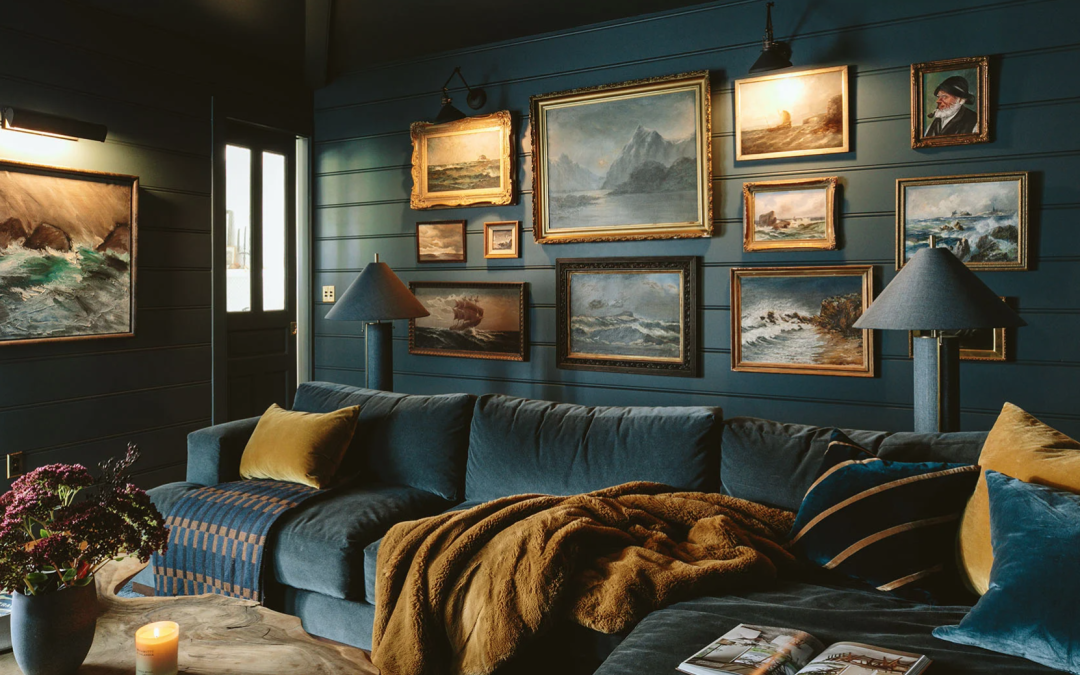
Cover Image: @em_henderson
Hanging art in your home can feel like both an exciting opportunity and a daunting task. With so many choices in style, placement, and positioning, it’s easy to feel unsure about where and how to display your favorite pieces. But fear not—whether you’re working with a statement piece, a gallery wall, or a collection of smaller artworks, this guide will help you create a home that showcases your art beautifully. We’ll discuss the correct heights for hanging artwork, offer some tips and tricks to help you make the most of your space, and even suggest a few unexpected places to hang art for a unique touch.
Why Hanging Art Correctly Matters
Art isn’t just a decorative element; it reflects your personality, tells stories, and creates focal points in your home. When done right, hanging art can transform a space, bringing walls to life and adding layers of interest and beauty to your home.
However, hanging art at the wrong height or in the wrong spot can disrupt the flow of a room, make the space feel disjointed, or simply look awkward. Paying attention to how you hang your art is key to creating a balanced, well-designed space.
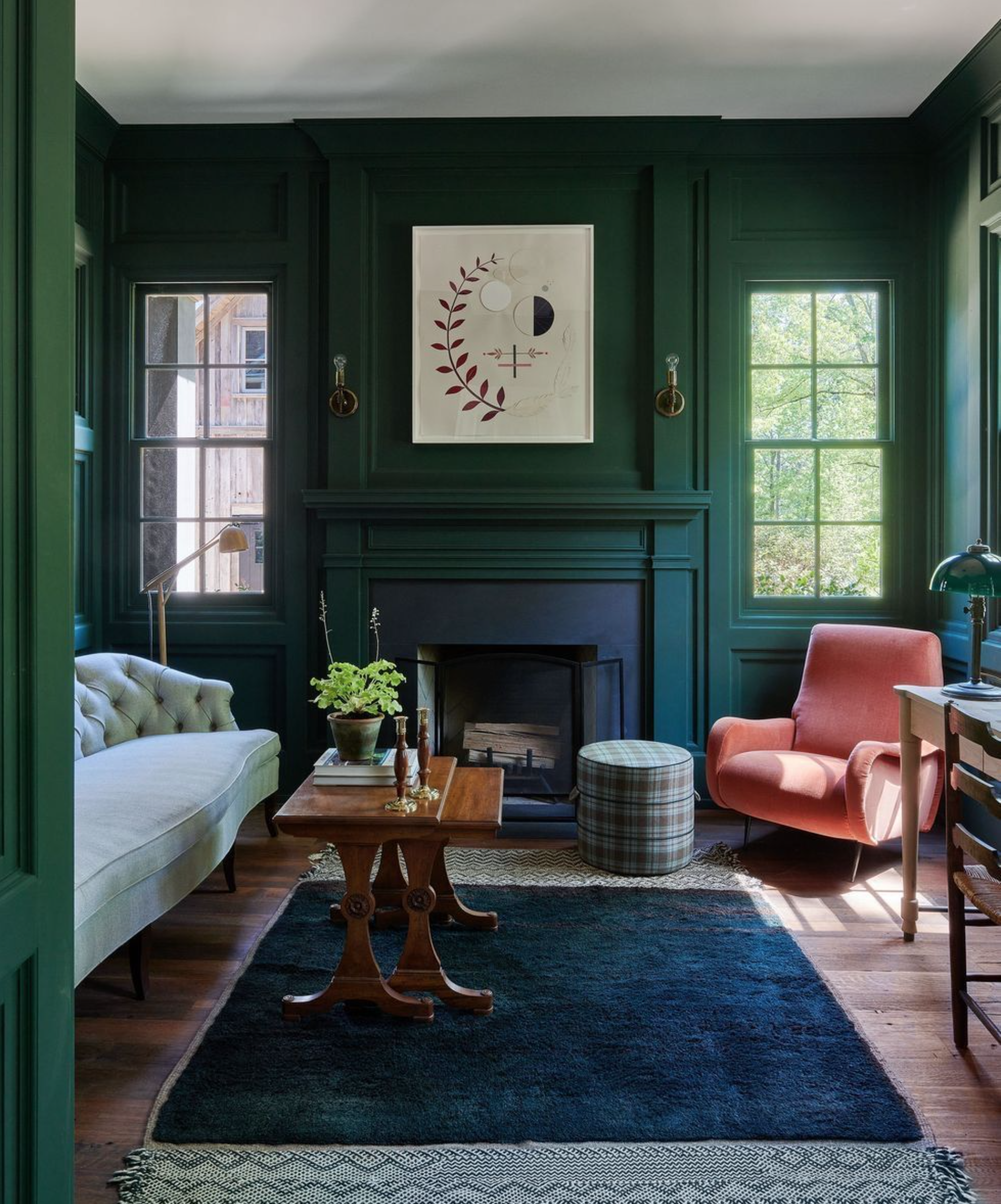
Source: Nickey Kehoe
The Ideal Height for Hanging Art
One of the most common mistakes people make when hanging art is placing it either too high or too low. So, what’s the magic formula? Interior designers typically follow the “57-inch rule.”
The 57-Inch Rule: This guideline suggests that the center of your artwork should be positioned 57 inches from the floor. Why? Because 57 inches is the average eye level, and art that hangs around eye level feels balanced and natural. This rule is commonly used in galleries and museums, making it a reliable standard for your home.
Here’s how to apply it:
- Measure the height of your artwork.
- Divide that number by two to find the center of the piece.
- Add the distance from the top of the frame to the hanging point (if using wire or hooks).
- Subtract that total from 57 inches, and the result will tell you where to place your hook or nail.
Adjust for Furniture: If you’re hanging art above a piece of furniture, like a sofa, console table, or bed, the 57-inch rule can be modified slightly. You want to ensure the art is visually connected to the furniture. In these cases, aim to hang the art so that the bottom of the frame is 6 to 8 inches above the furniture. This creates a sense of cohesion between the art and the furnishings, making the space feel more intentional.
Adjusting Height for Different Spaces
While the 57-inch rule is a great general guideline, you may need to adjust for specific spaces:
-
Living Rooms: When hanging art in living rooms, particularly above a sofa or mantel, you should consider both the height of the room and the furniture. Generally, your art should hang so that the bottom edge is 6-8 inches above the furniture or mantel.
-
Bedrooms: In bedrooms, art is often hung above the headboard. In this case, the art should sit lower on the wall to maintain a comfortable and relaxing atmosphere. You want to keep the artwork at a reasonable height so that it doesn’t overpower the room. Again, keeping it around 6-8 inches above the headboard works well.
-
Hallways and Corridors: Hallways are often narrower, and people view art here from closer distances. In these spaces, you can hang art slightly lower, around 55 inches from the floor to the center of the artwork, so that it’s at eye level as you walk by.
-
Kitchens: Art in the kitchen is less common but highly effective when done right. Since kitchen walls often have cabinets, appliances, and counters, art should be hung where it can stand out without clashing with these elements. Aim for small to medium pieces hung at eye level or slightly lower if they’re above a counter.
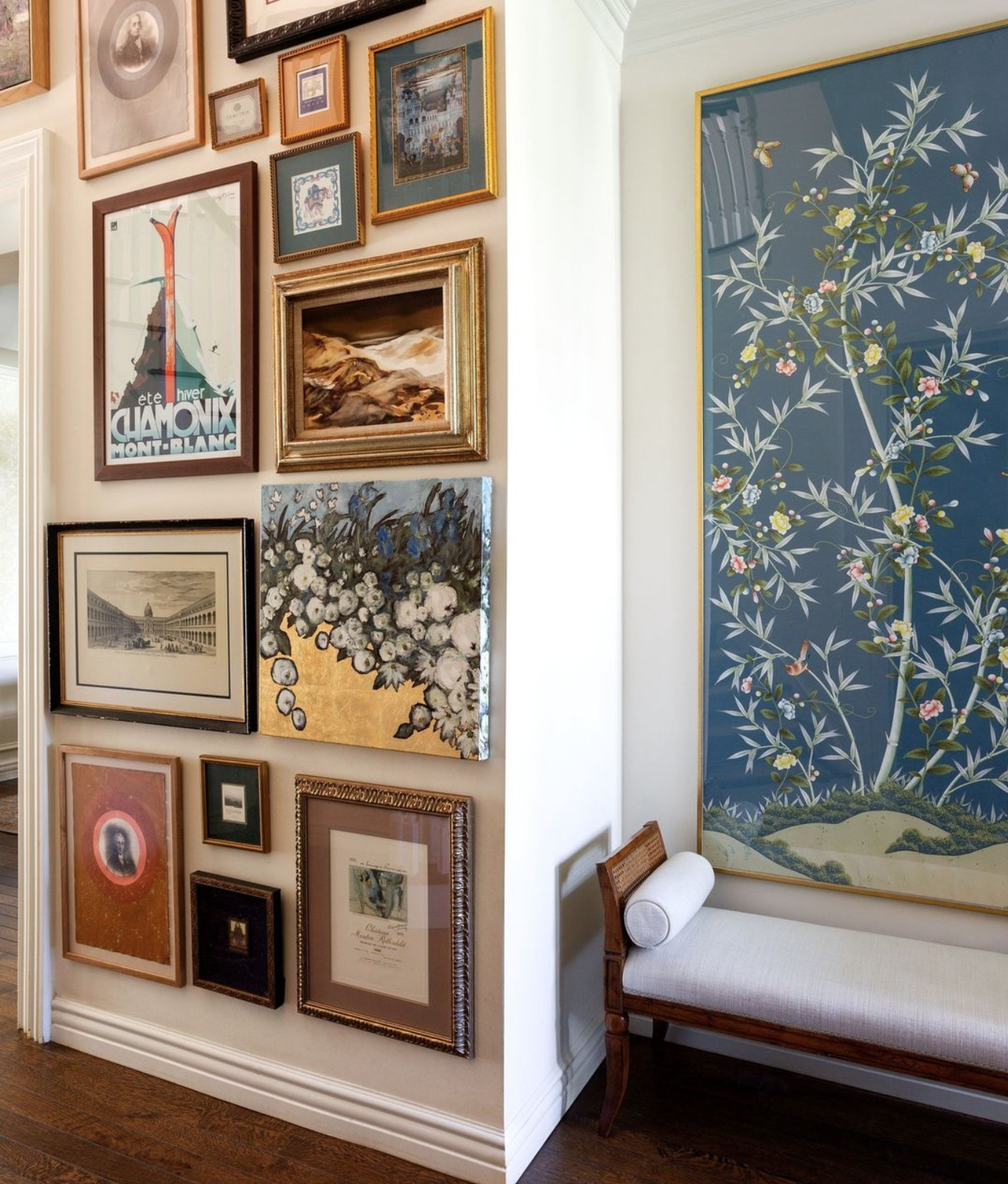
Source: Jen Feldman Designs
How to Arrange Multiple Pieces of Art
If you’re hanging more than one piece of art, either as a gallery wall or as a series of pieces, the height rule still applies, but there are a few extra considerations.
Gallery Walls: When creating a gallery wall, think of the entire arrangement as one large piece of art. You’ll want to center the grouping around the 57-inch mark. Start with your central piece, hang it using the 57-inch rule, and then build out from there. Aim for 2-3 inches of space between each piece for a cohesive look.
Symmetrical Arrangements: If you’re hanging two or more pieces of art side by side, the midpoint of the grouping should be at eye level. For example, if you’re hanging two pieces that are the same size, hang them so that the space between the two is equal and they align vertically.
Asymmetrical Arrangements: Asymmetry can add a lot of personality and visual interest to a room. Try varying the heights of pieces in a group while keeping a general alignment around the center. This creates a more dynamic and eclectic look.
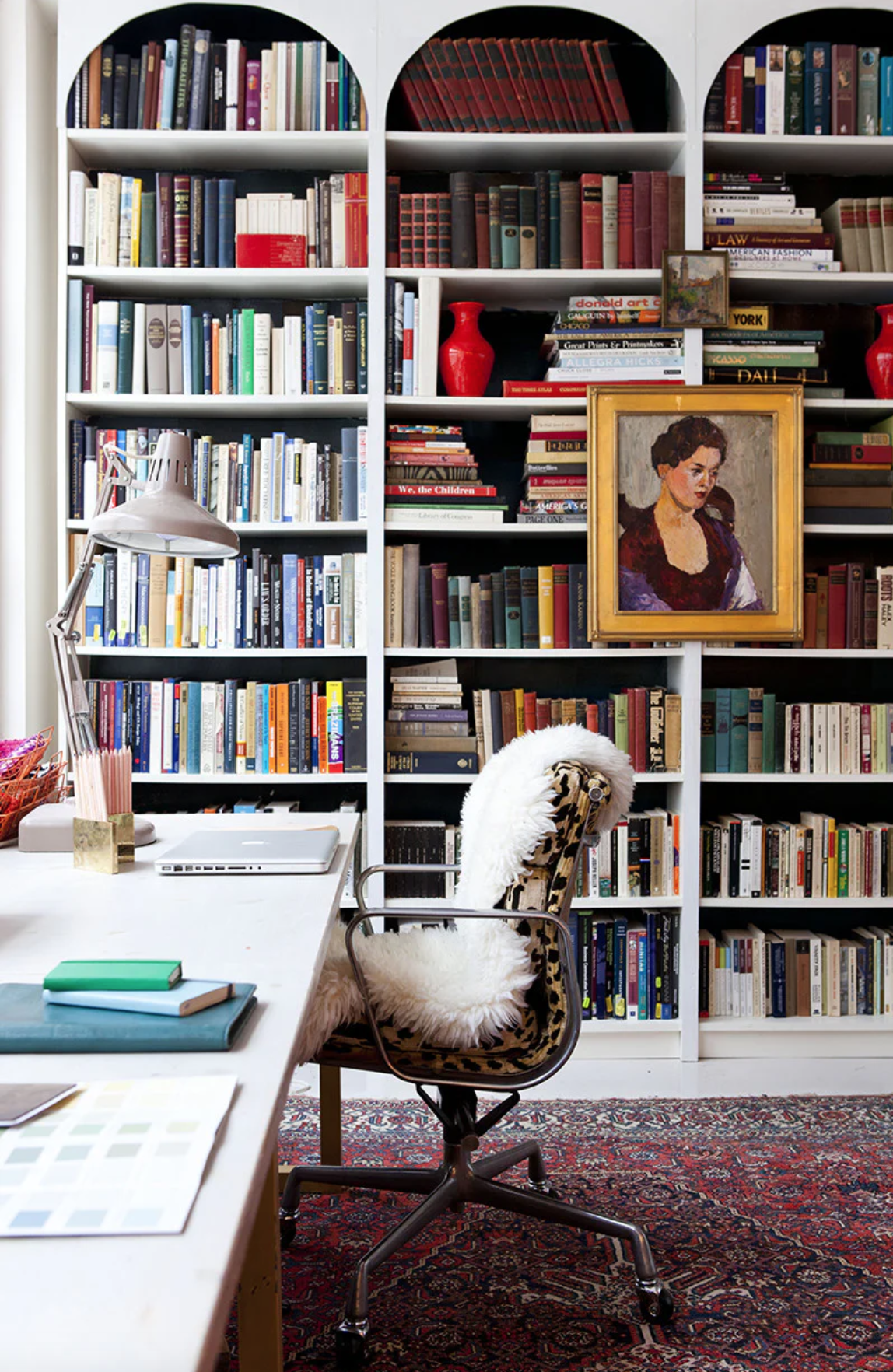
Source: Jenny Komenda
Unexpected Places to Hang Art
When we think of hanging art, we often think of common places like living rooms, bedrooms, and hallways. But art can bring life to unexpected areas of the home, adding a touch of creativity and surprise. Here are a few unconventional places to consider:
-
The Kitchen: As mentioned earlier, the kitchen is an often-overlooked area for art, but it’s actually a great place to add personality. Consider hanging small, playful pieces of art or even food-themed prints on an open wall. You can also place art above open shelving or even behind glass cabinets for a subtle effect.
-
The Bathroom: The bathroom is another space where art can make a big impact. Choose pieces that can handle a bit of humidity, like framed prints or water-resistant materials, and hang them above the towel rack, near the vanity, or even next to the shower. Art in the bathroom can create a spa-like atmosphere and add unexpected elegance.
-
Above Doorways: The space above doorways is often wasted, but it can be an excellent spot for a small piece of art or even a quirky statement piece. This placement draws the eye upward and can make a room feel taller.
-
The Staircase: Staircases offer a great opportunity to create a unique gallery wall. The verticality of the space allows for a fun, cascading arrangement of pieces, whether symmetrical or eclectic. Follow the slope of the stairs and vary the sizes of your artwork for an interesting effect.
-
Closets and Dressing Rooms: Art isn’t just for the main living spaces—why not add a personal touch to your closet or dressing room? Hanging a small painting or print can bring a bit of luxury to your morning routine, and it’s a perfect way to enjoy your favorite pieces in private.
-
Bookcase Art: For a bold statement, consider hanging art on or in a bookcase. This unexpected location can add an avant-garde feel to your space.
-
Around Windows: Don’t be afraid to hang art near or around windows. While natural light is a great feature in any home, the space around windows can often feel bare. Add small prints or frame artwork to the side of the window to create balance.
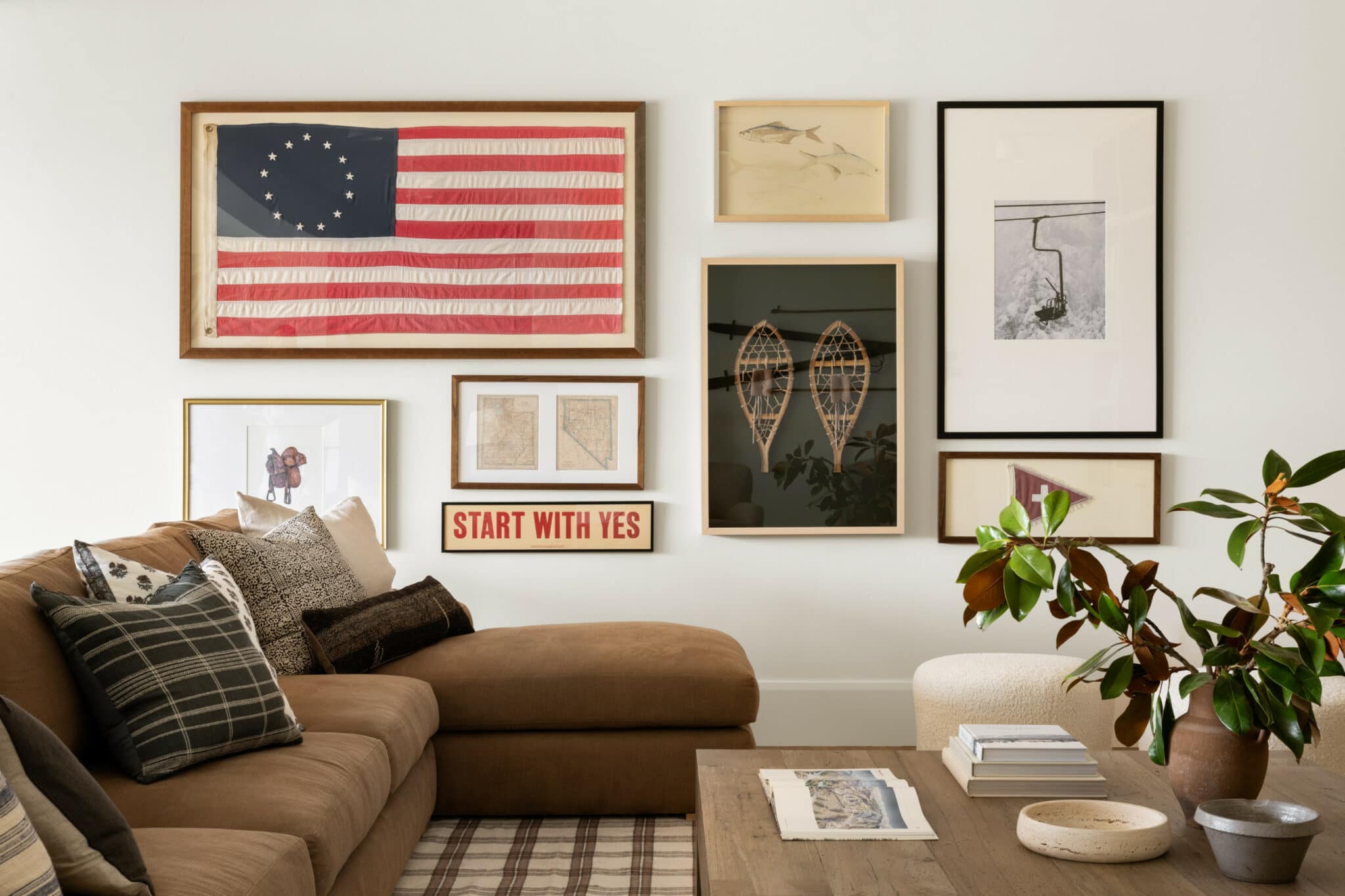
Source: Studio McGee
Choosing the Right Art for Your Space
Choosing the right art for your space can be one of the most enjoyable parts of the decorating process. Here are a few considerations to help you make the best choice:
Scale and Proportion: The size of your art should be proportional to the size of the wall or space you’re decorating. A large wall can handle an oversized piece of art or a grouping of smaller pieces, while a small wall may look best with one small or medium-sized piece.
Color Palette: Consider the colors in your space when choosing art. If your room is neutral, you might opt for a bold, colorful piece that stands out. Alternatively, if your room is already full of color, a more subdued or monochromatic piece may complement the decor.
Style and Theme: Choose artwork that reflects your personal style and fits with the overall theme of your home. Whether you love abstract art, photography, or traditional paintings, make sure the piece resonates with you and complements the room.
Frames and Presentation: The way you frame your artwork can also make a big difference in how it looks in your space. Consider matching frames for a uniform gallery wall or mix and match different styles for an eclectic look. The frame should complement the art itself as well as the room’s decor.
Talk to you later, friends!

PS Do you have a favorite piece of art in your home? Share a photo with us! Tag us @thestillinterior
Is your SPACE ready for a CHANGE?
The Still Interior is here to help. We will put methods in place to keep your home looking beautiful, and most importantly functional for your lifestyle.